


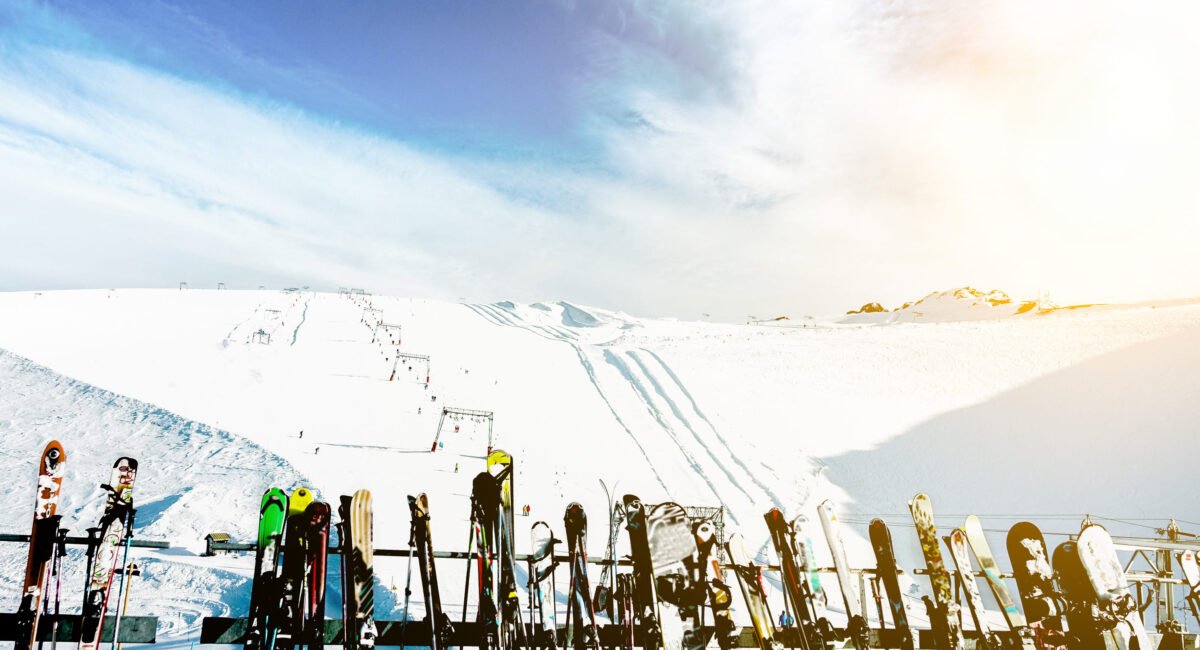
Ski season is closer than it looks from Marbella. Sierra Nevada is around three hours away by car and is expected to open in late November, snow permitting. Many families are already looking at dates for their first trip. The catch is that we go straight from the seafront promenade to the slopes, with nothing in between, and our knees feel it. Here’s how a physio in Marbella can help you arrive ready, enjoy every run and come home without an injury.
Why skiing asks so much of your body
Skiing looks like a leg sport, but it works your whole body. You spend hours in a bent-knee position where your thighs never get a break. On every turn, the boot locks your foot in place while the rest of you rotates, and your knee takes that twist.
Add the cold, the altitude and something every skier knows: the “one last run”. Late in the day, with tired legs, technique and reflexes slip, and that’s exactly when a lot of falls happen.
Snowboarding is a little different. Falls tend to go forwards or backwards, hands first, so wrists, shoulders and the tailbone take more of the impact.
The most common injuries on the slopes
- Knees. The main culprit. The ligaments (especially the medial collateral and the anterior cruciate) and the menisci suffer with twisting movements and backward falls.
- Shoulders. Knocks and dislocations from landing on an outstretched arm.
- Skier’s thumb. A thumb ligament injury that happens when you fall while still gripping your pole.
- Wrists and tailbone. Very common among snowboarders.
- Lower back. Overload and muscle tightness after several days in a row on the slopes.
If, after a fall, you feel sharp pain, the joint swells within a few hours, or your knee feels like it “gives way”, don’t brush it off. It needs a medical assessment. At InOne you can see a specialist without changing clinics: Dr Manuel Zapatero Herrera, an orthopaedic surgery and traumatology specialist, consults with us.
How a physio in Marbella gets you ready for the season
Ideally, start preparing four to six weeks before your trip. If you’re heading up in December, now is the time. This is how we approach it:
1. Initial assessment. We look at old injuries that are easy to forget (an ankle sprain that never fully settled, a knee operated on years ago), along with your strength, balance and hip and ankle mobility.
2. Strength with a purpose. Squats, lunges, glute work and exercises in the skiing position itself, such as holding a wall sit. The goal is for your legs to handle run number fifteen as well as the first one.
3. Balance and control. Single-leg work, unstable surfaces and changes of direction. Knees are far better protected when your body reacts quickly.
4. Mobility. A stiff ankle or a hip that won’t rotate forces the knee to compensate. Working on them makes a real difference.
5. Hands-on treatment when needed. If you’re carrying tightness or old niggles, manual therapy or dry needling can help you start the season without them.
The plan is adapted to your level. Someone who skis every weekend needs something different from a parent who goes once a year with the kids. You can see how we work on our physiotherapy, osteopathy and podiatry treatments page.
Tips for your days on the slopes
- Warm up before your first run. Ten minutes of mobility and a few easy squats are enough.
- Check your equipment. Bindings should be set for your weight and level. Ask a specialist shop to check them.
- If it’s been a while, book a lesson or two. Getting your technique back is prevention too.
- Drink water and eat something. Altitude and cold tire you more than you think.
- Respect the last run. If you’re tired, finishing half an hour early is the better call.
- Back home, walk, stretch gently and rest. If something still hurts after a few days, get it checked.
If you come back with an injury
Sometimes, even when you do everything right, a silly fall ends in an injury. Trauma and orthopaedic physiotherapy helps you rebuild movement, strength and confidence step by step, including before and after surgery if it comes to that. And if all you’ve brought back is heavy, tired legs after a few days of skiing, a sports massage helps them recover.
Make the snow all about the fun
Getting ready doesn’t mean turning your trip into a training camp. It means arriving with a body that’s ready to enjoy every run, and coming home already planning the next one.
If you’re planning a ski trip, or you’ve just come back with an ache that won’t go away, book an appointment with our team and we’ll put together a plan that suits you. Before your first visit, you can get to know our physiotherapy clinic in Marbella and the people who’ll be looking after you.
